
Complete Guide to PHP for Modern Web Development
Learn what PHP is, how it works, its advantages, frameworks, real-world uses, and why it is still one of the most powerful backend technologies for modern web applications.
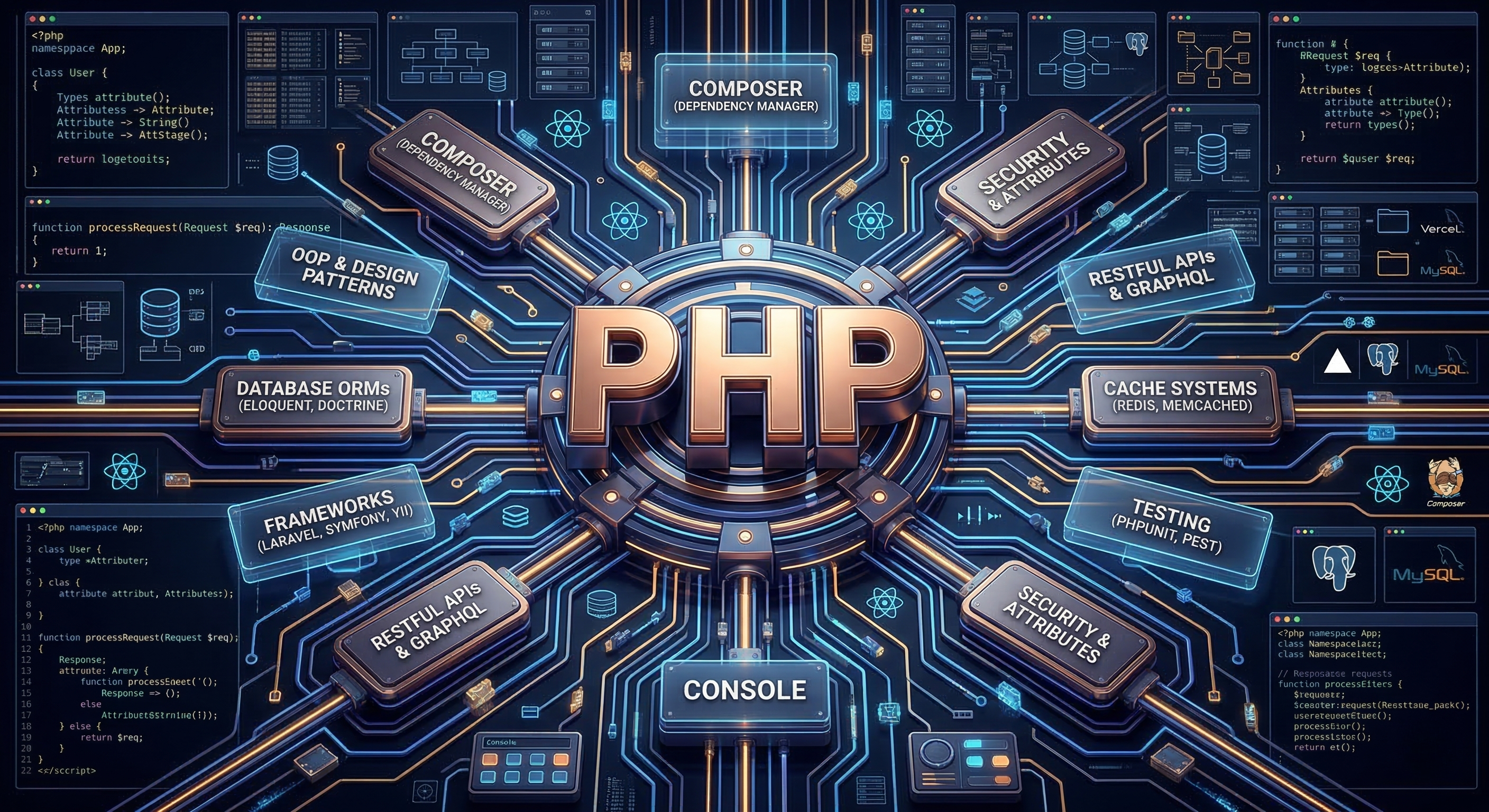
Introduction to PHP
PHP is one of the most widely used server-side scripting languages in the world.
It is specially designed for web development and powers millions of websites and applications globally.
From small business websites to large platforms like Facebook and WordPress, PHP has played a major role in modern web development.
What is PHP?
PHP stands for “Hypertext Preprocessor.” It is an open-source backend programming language used to create dynamic and interactive websites.
PHP runs on the server, processes the data, communicates with databases, and then sends the final output to the browser.
Why PHP is Popular
- Easy to learn for beginners
- Fast development process
- Works with almost all hosting providers
- Strong database support like MySQL
- Large developer community
- Open-source and free to use
- Supports modern frameworks like Laravel
How PHP Works
When a user opens a PHP website, the browser sends a request to the server.
The server executes the PHP code, processes database queries if needed, and returns HTML content to the browser.
Users never see the actual PHP code because it runs securely on the server side.
Features of PHP
1. Server-Side Processing
PHP handles form data, login systems, sessions, authentication, APIs, and business logic securely on the server.
2. Database Integration
PHP easily connects with databases such as MySQL, PostgreSQL, and SQLite for storing and managing data.
3. Fast and Scalable
Modern PHP versions provide excellent performance and scalability for high-traffic applications.
4. Cross Platform
PHP works on Windows, Linux, and macOS environments without major changes.
Popular PHP Frameworks
Laravel
Laravel is currently the most popular PHP framework.
It provides elegant syntax, authentication systems, APIs, routing, and powerful tools for modern web applications.
CodeIgniter
CodeIgniter is lightweight and beginner-friendly for fast web development projects.
Symfony
Symfony is used for enterprise-level applications requiring high flexibility and performance.
Applications Built with PHP
- Blog websites
- E-commerce platforms
- CRM systems
- Admin dashboards
- School management systems
- Social networking websites
- REST APIs and mobile app backends
Advantages of PHP
- Affordable hosting support
- Large ecosystem and plugins
- Easy deployment process
- Massive community support
- Regular updates and improvements
- Excellent for startups and businesses
PHP and MySQL Combination
PHP is commonly used with MySQL database.
This combination is powerful for creating complete dynamic websites where data can be stored, updated, and displayed efficiently.
Modern PHP Development
Modern PHP development includes:
- REST API development
- JWT Authentication
- Laravel Filament admin panels
- Payment gateway integration
- Cloud deployment
- Microservices architecture
- Real-time applications
Is PHP Still Relevant in 2026?
Yes, PHP remains highly relevant in 2026.
Many businesses continue using PHP because of its stability, cost-effectiveness, and large ecosystem.
Laravel and modern PHP tools have made development faster and more secure than ever before.
Conclusion
PHP continues to be one of the strongest technologies for backend web development.
Whether you are building a startup website, an enterprise application, or a custom admin dashboard, PHP provides flexibility, speed, and reliability.
With frameworks like Laravel, developers can build secure and scalable applications efficiently.